
Macro Overview
Uncertainty surrounding control over the Strait of Hormuz continued to drive oil prices in varying directions, as safe passage for oil transport vessels was challenged throughout July. The uncertainty sparked heightened market volatility and dramatic oil price swings. The outcome of the war hinges on the Strait of Hormuz and the resumption of the flow of oil traversing through the waterway.
Members of the Federal Reserve remained fractured about the direction of interest rates and whether a rate cut was still a possibility. The division among Fed members in deciding the direction of interest rates is disturbing fixed income markets and company spending projections.
U.S. Customs & Border Protection has refunded about $100 billion of collected tariffs, as ordered by the Supreme Court in February. The refunds thus far represent roughly 60% of the $165 billion collected from U.S. companies on imported products and components that were imposed by the administration last year.
Rising lumber prices are hindering the housing market as a result of imposed tariffs on imported timber from Canada and the shuttering of numerous lumber mills in both Canada and the U.S . Over 90% of U.S. homes are constructed using wood framing, making lumber a vital component to new home construction and remodels.
The average for a 30-year fixed mortgage increased to 6.69% in July, the highest since July of 2025. According to FreddieMac data, Americans need to earn nearly $110,000 annually to afford the typical U.S. home for sale . Starter homes are usually more affordable for homebuyers, but pricey renovation costs are making them less attainable.
The strongest El Niño weather pattern in 76 years is projected to disrupt agricultural production worldwide because of extreme droughts and floods, threatening to push nearly 49 million more people into acute hunger by the end of 2027. Excessive rain and elevated temperatures are expected to destroy crops north and south of the equator, sending food supplies lower and prices higher globally.
Employment unexpectedly contracted in July, with 23,000 fewer jobs last month, a big shortfall versus the gain of 83,000 that economists had expected. Revisions to May and June payroll numbers also revealed that the economy added 103,000 fewer jobs in May and June than originally reported. The Federal Reserve closely tracks the employment market for signals of economic strength and inflationary trends.
Artificial intelligence (AI) is driving rapid transformation in medical technology, dramatically accelerating drug discovery for incurable diseases, improving diagnostic accuracy in radiology and pathology, enabling real-time surgical navigation, and personalizing patient treatment plans. A growing number of physicians and hospitals are incorporating AI into their medical procedures.
Sources: FreddieMac, Dept. of Labor, BLS, NOAA, National Institutes of Health, National Association of Homebuilders, U.S. Customs & Border Protection
Heightened Rates & Oil Prices Stoke Volatility - Domestic Equity Overview
Energy sector stocks continued to lead the S&P 500 index in July and year to date, as elevated oil prices and increasing demand for electricity stemming from AI data center demand drove prices higher. Subsequently, the rising costs of electricity and petroleum products is bearing a toll on certain margin sensitive sectors and stocks.
The major equity indices, including the S&P 500, Dow Jones Industrial and Nasdaq, are all up at nearly the same levels of 9% year to date, as of the end of July. Such a broad market consistency is reflective of high macro-driven correlation and a lack of stock-specific divergence.
Sources: Dow Jones, S&P, Nasdaq, Bloomberg
Fed on Fence With Rate Direction - Fixed Income Overview
Federal Reserve members became increasingly divided in July as inflationary concerns and expanding AI investments prompted the Fed to evade a rate reduction anytime soon.
The yield on the 30-year U.S. Treasury bond rose to a 19-year high in late July, surpassing levels last reached in late 2007 of over 5.25%. Treasury bond yields swung wildly in July, as tensions surrounding oil price uncertainty drove inflationary concerns.
Oil prices have become an indicator of where interest rates may be headed. Driven by inflation expectations, when oil prices rise, manufacturing and transport costs also increase, stoking broader inflation fears and more likelihood of higher rates.
Sources: U.S. Treasury, Dept. of Energy, Federal Reserve
Employment Market Stabilizing - Labor Market Update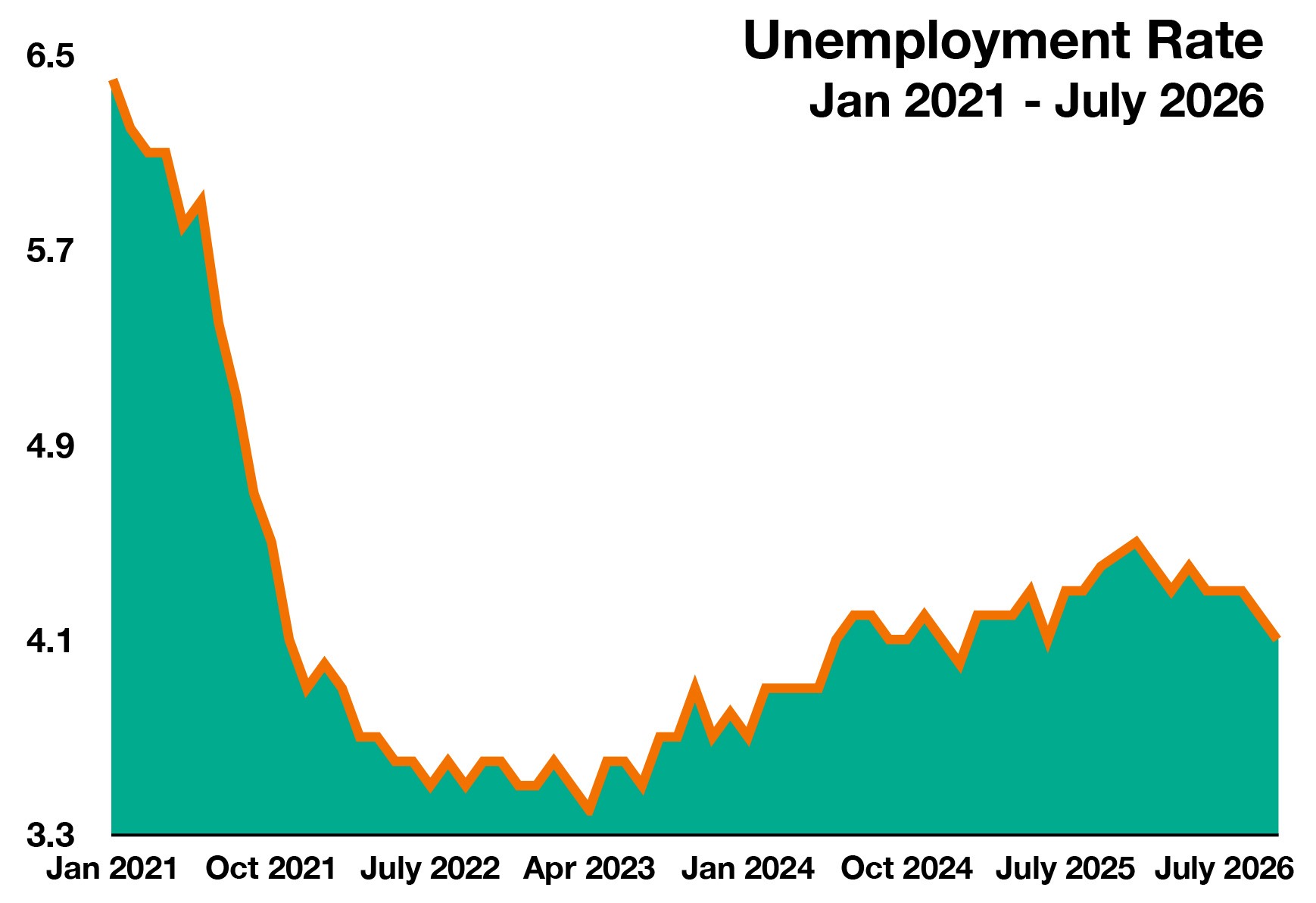
Labor market dynamics are critical to the health of the U.S. economy as well as consumer expectations and confidence. Optimistically, employers increased hiring in June as layoffs stabilized while consumers continued to spend. Even with the unemployment rate falling to 4.1% in July, the labor market is sending conflicting signals regarding the stability of jobs.
Wages and income are key to labor growth and consumer expenditures, as recent reports show smaller payroll gains than the post-recovery boom following the pandemic. Economists believe that the labor market is settling into a slower pace of wage increases rather than rapid acceleration of incomes.
Jobless claims remain relatively low, which usually means companies are not cutting staff aggressively and mitigating layoffs for the time being. Employers, however, do seem more cautious, resulting in less job openings and hiring. It has become more of a selective market, with companies still hiring, but usually more carefully and with tighter requirements.
Health care, professional services, and social assistance have continued to show strength, while weaker areas such as leisure and hospitality offset gains in other occupations.
Sources: BLS, Dept. of Labor
How AI Is Impacting Consumer Behavior - Technology Advancement
AI is already acting as a daily “assistant” for many consumers, changing how people search, shop, decide, and even trust information.
A growing number of users now rely more on AI for quick answers, while traditional search engine use and website visits have declined noticeably. Instead of going directly to traditional websites, consumers are receiving AI-generated summaries that compresses the research process.
AI helps consumers sort through numerous choices by comparing options, narrowing lists, and explaining trade-offs, which speeds up decision making efforts.
More and more consumers are using AI to shop, rather than going directly to a retailer’s website. AI allows for summarized products, brands, and pricing all in one search. The bombardment of ads can also be minimized while shopping via AI, allowing for more objective product and service options.
Because of the shortened process facilitated with AI, shopping selections can be made very quickly with dramatically shortened decision periods. The advances behind AI are enabling consumers to identify options quicker, with retailers adjusting by offering more competitive pricing and features. Brands are increasingly competing not just for consumer attention but for the attention of AI systems that recommend products.
Interestingly enough, consumers are more apt to trust AI for practical decisions rather than traditional websites, yet still prefer human input and interaction. A growing number of companies are now using AI customer service agents that mimic human language and inflections, seemingly close to an actual human in basic chat conversations.
It is expected that the continued integration of AI and gradual acceptance by consumers will enable commerce over the internet to become more efficient and cost effective for consumers.
Sources: Dept. of Commerce, FTC, Consumer Reports
Elevated Lumber Prices Are Affecting The Housing Market - Housing Sector Overview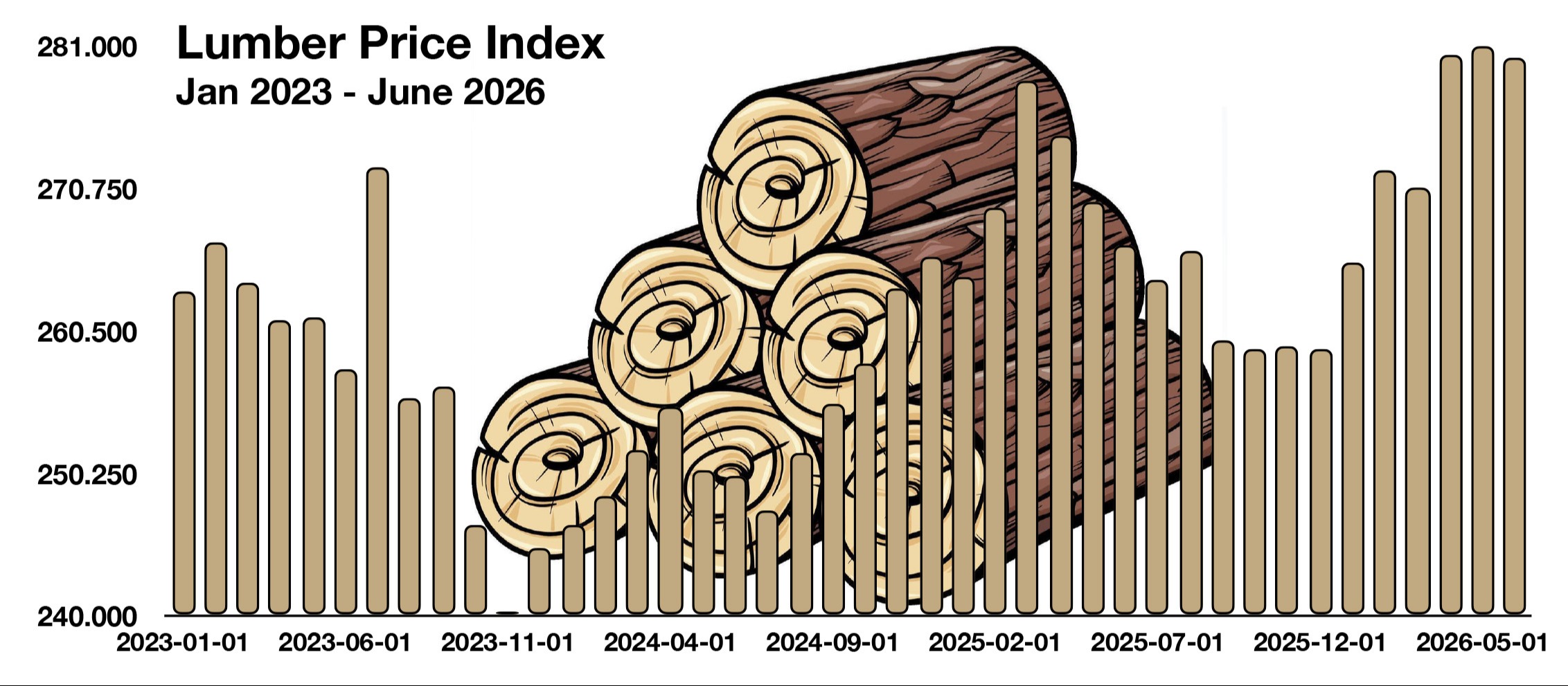
The housing market is becoming increasingly challenged by several factors, including rising mortgage rates, weaker pending sales, softer buyer activity, and rising inventory levels.
Rising lumber prices have also been increasingly troublesome for the housing market, as a result of imposed tariffs on imported timber from Canada and the shuttering of numerous lumber mills in both Canada and the U.S. With over 90% of U.S. homes constructed with wood framing, lumber is a vital component to new home construction and remodels nationwide.
Housing construction and remodels have become more expensive since supply constraints began during the pandemic, as skilled labor shortages and increasing material costs made it increasingly expensive for homeowners. In addition, rising mortgage rates have been hurting affordability because of higher mortgage payments. Because of pricey lumber and labor costs, residential construction spending has also weakened, reflecting slower homebuilding demand nationwide.
Sources: Federal Reserve Bank of St. Louis, National Association of Homebuilders
**Market Returns: All data is indicative of total return which includes capital gain/loss and reinvested dividends for noted period. Index data sources; MSCI, DJ-UBSCI, WTI, IDC, S&P. The information provided is believed to be reliable, but its accuracy or completeness is not warranted. This material is not intended as an offer or solicitation for the purchase or sale of any stock, bond, mutual fund, or any other financial instrument. The views and strategies discussed herein may not be appropriate and/or suitable for all investors. This material is meant solely for informational purposes and is not intended to suffice as any type of accounting, legal, tax, or estate planning advice. Any and all forecasts mentioned are for illustrative purposes only and should not be interpreted as investment recommendations.